
Updated January 2026 to reflect current surrogacy processes, legal considerations, and coordination standards.
Finding a surrogate in the United States in 2026 typically involves working with a licensed surrogacy agency, consulting a fertility clinic, and engaging a reproductive attorney. Intended parents must identify a medically and emotionally qualified surrogate, confirm eligibility based on state law, and coordinate medical screening, legal contracts, and matching. A full service surrogacy agency helps organize these steps and coordinate the professionals involved throughout the process.
This guide explains the most common and safest ways intended parents navigate the surrogacy process in the United States.
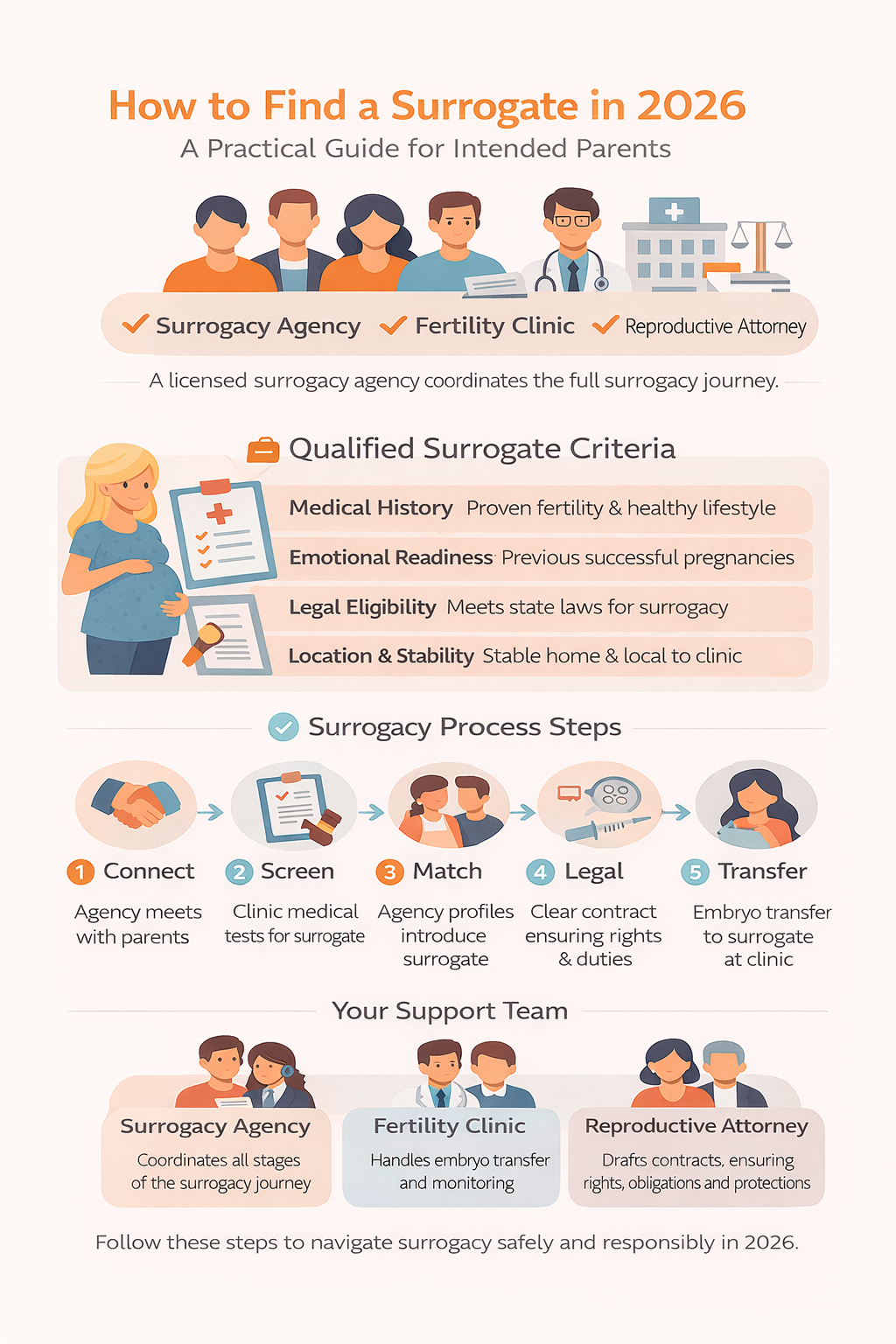
How to Find a Surrogate Through an Agency
Working with a licensed surrogacy agency is one of the most structured ways to find a surrogate in the United States. Surrogacy agencies act as coordinators rather than medical or legal providers, helping manage the screening, matching, and ongoing support required throughout a surrogacy arrangement.
A surrogacy agency typically begins by educating intended parents about the overall process, expected timelines, and participation requirements. This includes explaining medical screening standards, outlining legal considerations that vary by state, and setting expectations for communication and involvement during pregnancy.
Agencies recruit and evaluate potential surrogates before introducing them for matching. Screening generally includes a review of medical records, psychological evaluations, background checks, and confirmation of prior healthy pregnancies. This early screening step helps reduce risk and ensures that candidates meet established medical and emotional criteria before moving forward.
After screening, the agency facilitates the matching process by considering compatibility factors such as communication preferences, values, pregnancy history, and legal considerations. A successful match prioritizes alignment and long term cooperation between the intended parents and the surrogate rather than speed alone.
Once a match is agreed upon, the agency coordinates timelines and communication among fertility clinics, reproductive attorneys, mental health professionals, and escrow providers. Although agencies do not deliver medical care or legal advice, they help ensure that each step occurs in the proper order and that all parties understand their responsibilities.
During pregnancy and after delivery, agencies provide ongoing case management and administrative support. This often includes regular check ins, milestone coordination, and assistance navigating unexpected developments that can arise during a surrogacy journey.
For intended parents pursuing surrogacy for the first time, working with an experienced agency offers structure, oversight, and continuity in a process that involves multiple professionals, legal requirements, and significant emotional and financial considerations.
Can Clinics Help You Find a Surrogate?
Fertility clinics play a central medical role in the surrogacy process, but they typically do not manage surrogate recruitment or matching in the same way a surrogacy agency does. Most clinics focus on IVF treatment, embryo transfer, and pregnancy monitoring rather than the broader coordination required to find and support a surrogate.
Some larger fertility clinics maintain informal referral lists or relationships with surrogacy agencies and reproductive attorneys. These referrals can provide a starting point for intended parents who are beginning their search, but clinics generally do not conduct full surrogate screening or manage the legal and logistical steps of a surrogacy arrangement.
When clinics do share surrogate referrals, the level of screening varies. Intended parents are often responsible for confirming that a potential surrogate meets medical, psychological, and legal requirements and for coordinating contracts and ongoing support independently or through outside professionals.
For this reason, clinics are most effective as medical partners rather than as primary facilitators of surrogate matching. Intended parents often combine clinic care with support from a surrogacy agency and a reproductive attorney to ensure that medical treatment, legal protections, and coordination are aligned.
Asking a fertility clinic for referrals can be a useful early step, especially for parents who already have an established relationship with a clinic. However, most intended parents rely on additional professional support to manage the full scope of the surrogacy process.
Legal Steps in How to Find a Surrogate
Legal guidance is a required part of finding a surrogate in the United States. Surrogacy laws vary by state, and intended parents must work with a qualified reproductive attorney to ensure that parental rights, compensation terms, and medical decision making authority are properly established.
The legal process typically begins after a surrogate match is identified. A reproductive attorney drafts and negotiates a gestational surrogacy agreement that outlines expectations, responsibilities, compensation, medical decision making, and contingency planning. Each party is represented by independent legal counsel to avoid conflicts of interest.
In many states, attorneys also assist with parentage establishment. This often involves filing for a pre birth or post birth order that legally recognizes the intended parents as the child’s legal parents. The availability and timing of these orders depend on state law and family structure.
Attorneys also advise intended parents on state specific requirements related to surrogacy eligibility, contract enforceability, and birth certificate procedures. This guidance is essential for ensuring that the surrogacy arrangement complies with local law and that parental rights are protected from the outset.
Because legal requirements differ across jurisdictions, intended parents should not rely on general information alone. Working with an experienced reproductive attorney helps ensure that contracts, court filings, and timelines are handled correctly and in coordination with medical treatment.
Ways to Find a Surrogate Compared
There are several ways to find a surrogate in the United States, and each option involves different levels of coordination, risk, and professional support. Understanding these differences helps intended parents choose an approach that aligns with their experience level, timeline, and comfort with legal and medical complexity.
Working with a surrogacy agency offers the most structured approach. Agencies coordinate screening, matching, and ongoing case management while working alongside fertility clinics, reproductive attorneys, and escrow providers. This option is commonly chosen by first time intended parents or those seeking full process oversight.
Clinic referrals can provide introductions to agencies, attorneys, or occasionally individual surrogates. Clinics focus on medical treatment rather than recruitment or coordination, so this approach often requires additional professional support to manage legal and logistical steps.
Independent matching involves finding a surrogate through personal networks or online platforms. While this approach may reduce agency fees, it places greater responsibility on intended parents to manage screening, legal contracts, and coordination. Independent arrangements carry higher legal and emotional risk if not carefully structured.
Each option can lead to a successful surrogacy journey when paired with appropriate medical and legal guidance. The key difference lies in how much coordination and oversight intended parents prefer throughout the process.
Discover how our Matching Compass™ can help you find the right surrogate faster.
Why Families Choose EDSI for Surrogacy Support
Egg Donor & Surrogacy Institute has supported families through surrogacy for more than 20 years. The agency operates as a boutique program, intentionally limiting case volume to provide individualized coordination and consistent communication. EDSI emphasizes transparency, structured processes, and ongoing support so intended parents can navigate surrogacy with clarity and confidence.
About the Author
Parham Zar is the Managing Director of the Egg Donor & Surrogacy Institute (EDSI), a leading expert in third-party reproduction. With more than 25 years of experience guiding intended parents, surrogates, and donors, he is a trusted voice in modern family building. Learn more at eggdonorandsurrogacy.com.
Frequently Asked Questions About How to Find a Surrogate
In 2026, intended parents can find a surrogate by working with a licensed surrogacy agency, receiving referrals from a fertility clinic or reproductive attorney, or pursuing an independent match with legal guidance. Many first time intended parents choose an agency for structure, screening, and coordination.
Independent surrogacy arrangements can be successful but involve higher legal, medical, and emotional risk. Without an agency, intended parents are responsible for screening, contracts, coordination, and ongoing support. Many families choose professional oversight to reduce risk.
Matching timelines vary based on preferences, legal factors, and surrogate availability. With an established agency, many intended parents match within three to twelve months, though timelines can be shorter or longer depending on circumstances.
In the United States, surrogacy typically costs between $150,000 and $200,000 or more, depending on medical care, legal structure, insurance coverage, and surrogate compensation.
A great surrogate has had at least one healthy pregnancy, meets medical and psychological screening standards, lives in a stable and supportive environment, and is willing to communicate openly throughout the surrogacy process.
Yes. Many intended parents prioritize surrogate location due to state specific surrogacy laws. Agencies and attorneys help intended parents understand how location affects legal process and parentage timelines.
Yes. Surrogates are compensated for their time, commitment, and medical risk. Compensation varies by experience, location, and pregnancy factors, and is structured through legal agreements and escrow.
Surrogacy agencies coordinate screening, matching, timelines, and communication, while fertility clinics provide medical care and reproductive attorneys handle legal contracts and parentage. Agencies do not provide medical or legal advice but help ensure proper coordination.
Yes. International intended parents can pursue surrogacy in the United States, though additional legal, travel, and documentation considerations apply. Agencies and attorneys help coordinate these requirements.
No. Working with an agency is not legally required, but many intended parents choose agency support for screening, coordination, and risk management.
Ready to Take the Next Step in Your Surrogacy Journey?
If you are exploring surrogacy and want guidance tailored to your situation, Egg Donor & Surrogacy Institute offers consultations to help you understand next steps, timelines, and considerations.


